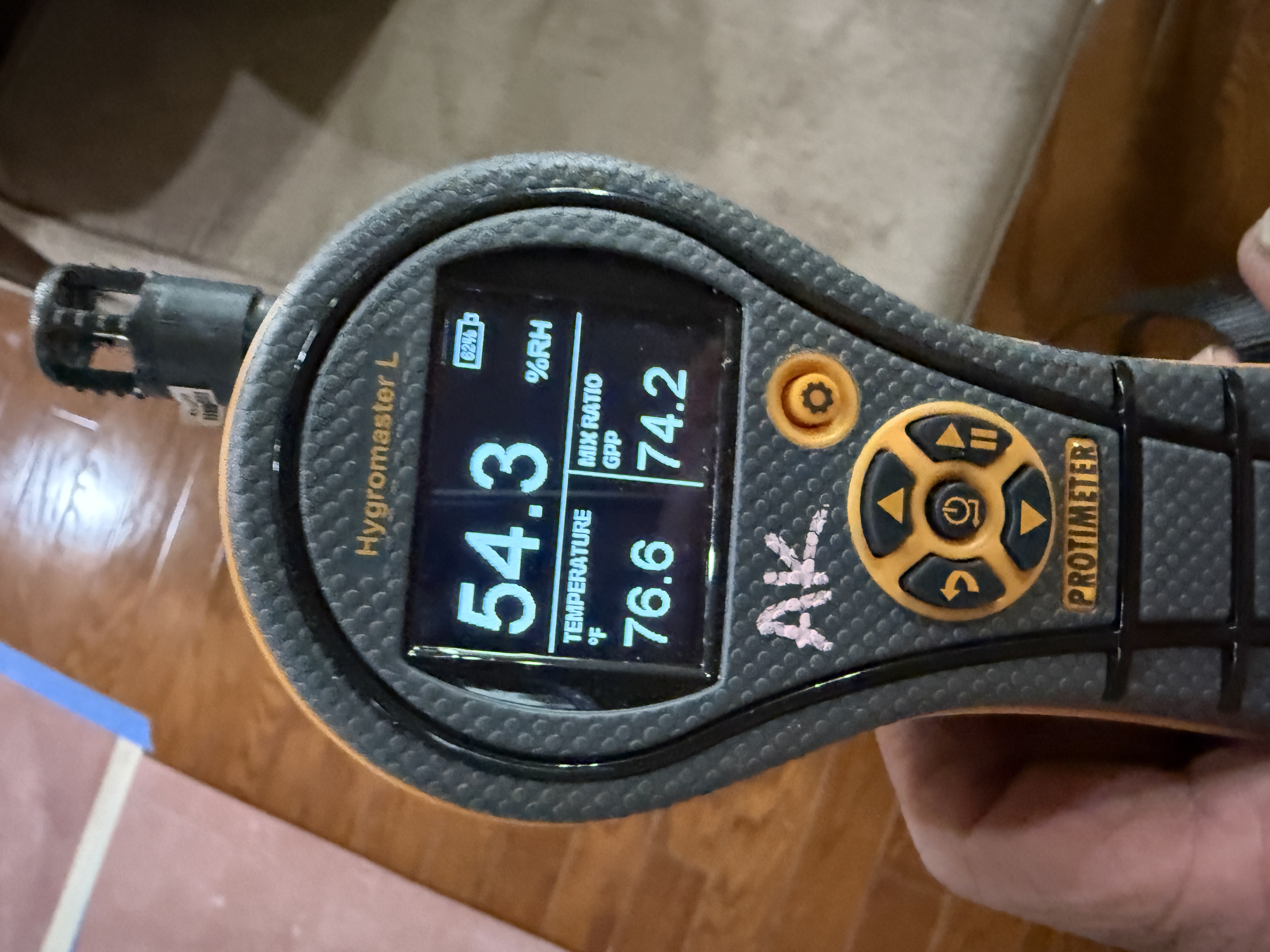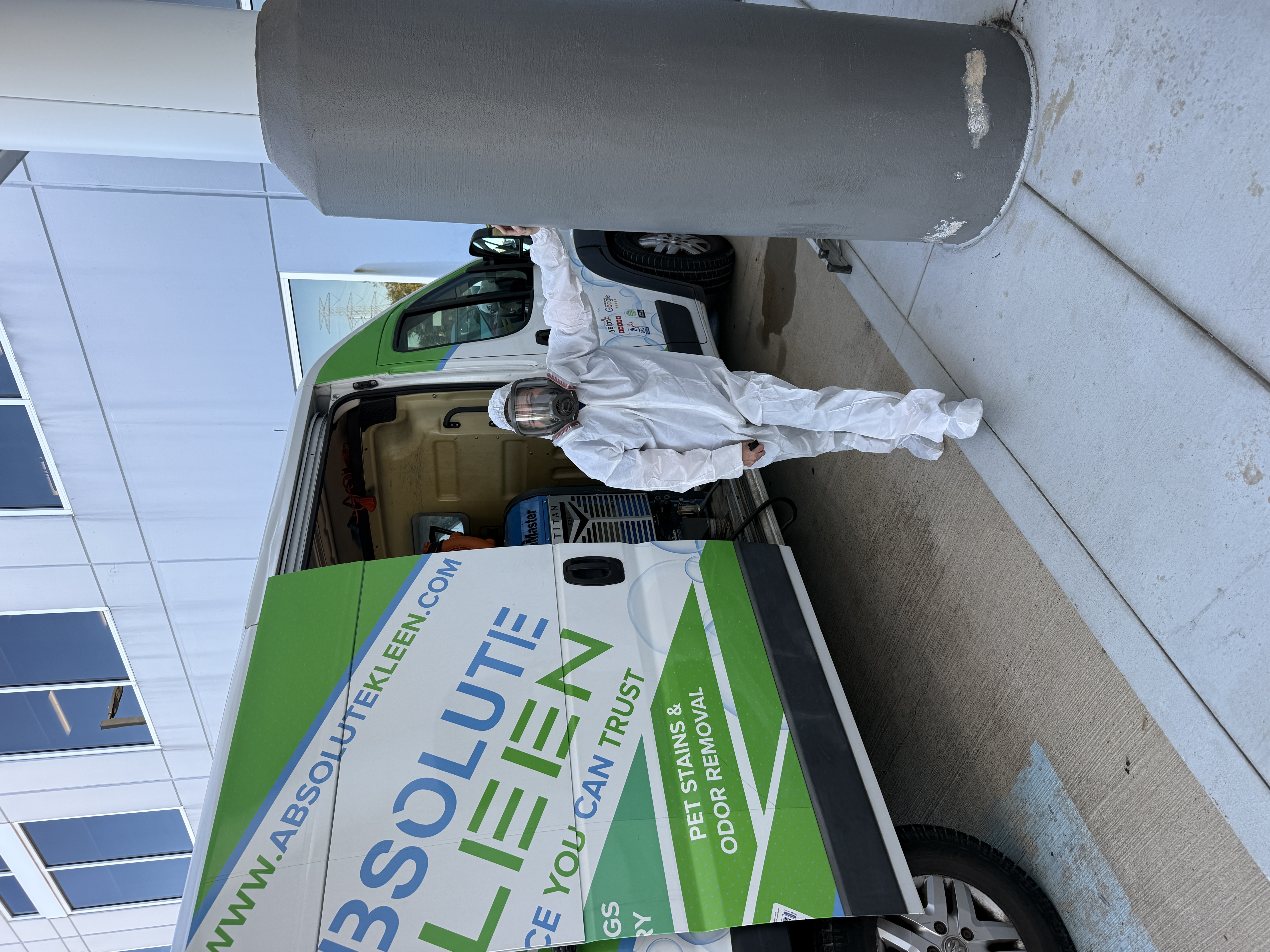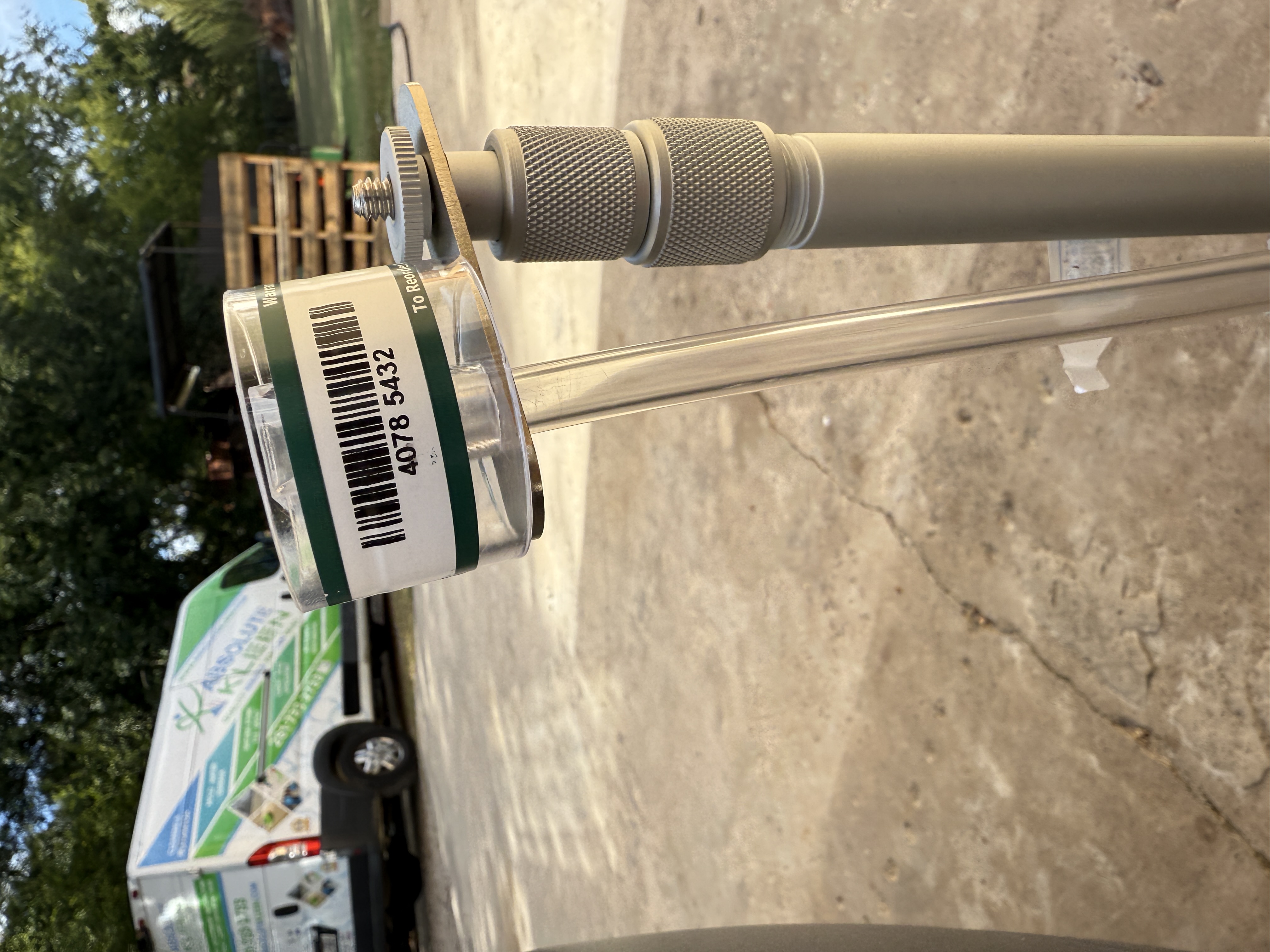
A licensed assessor interviews you, inspects the home for moisture and visible growth, uses moisture meters to find hidden water, and takes air or surface samples where needed. Samples go to an accredited lab, and you receive a written report with findings and, if needed, a remediation protocol.
If you suspect mold, the next step is usually an inspection. But many homeowners are not sure what that involves, how long it takes, or what they will get at the end. Knowing what to expect makes the whole process less stressful.
I'm Richard Jones with Absolute Kleen & Restoration. We hold Texas Mold Assessment Consultant license MAC #2165. Here is exactly what a licensed mold inspection looks like.
Why a licensed assessor matters
In Texas, mold assessment is regulated. For any remediation project over 25 contiguous square feet, a licensed Mold Assessment Consultant must evaluate the property and write a remediation protocol. A licensed assessor is trained to find hidden moisture, take proper samples, and interpret lab results. The report they produce is something your insurance adjuster and a remediation contractor can work from.
Step 1: The conversation
The inspection starts with questions. When did you first notice the problem? Is there a smell? Have there been leaks or floods? Is anyone in the home having symptoms? Where do you think the problem is? This helps the assessor focus on the right areas.
Step 2: Visual inspection
The assessor walks through the home looking for visible growth, water stains, peeling paint, warped materials, and signs of past leaks. This usually includes:
- Bathrooms and kitchens, especially under sinks
- Around windows and exterior doors
- The attic, particularly around the AC air handler and roof penetrations
- HVAC equipment, vents, and return air areas
- Laundry rooms and water heater closets
- Crawlspaces in older homes
Step 3: Moisture readings
Moisture meters let the assessor check inside walls, floors, and ceilings without opening them. Elevated readings point to hidden water, and hidden water is where hidden mold grows. The assessor may also check temperature and relative humidity in different rooms.
Step 4: Sampling
Air samples
A calibrated pump pulls a measured amount of air through a cassette that captures spores. Samples are taken in the areas of concern and outside the house for comparison. If indoor levels are much higher than outdoor levels, or indoor types differ from outdoor ones, there is likely a source inside.
Surface samples
If there is visible growth, a swab or tape lift identifies what it is.
Wall cavity samples
If a specific wall is suspected, a small hole allows a sample of the air inside the cavity without opening the whole wall.
Step 5: Lab analysis
Samples go to an accredited laboratory, which identifies the types of mold and how much is present. Results usually come back within a few business days.
Step 6: The report
You get a written report explaining what was found in plain language. If remediation is needed, it includes a protocol: which areas need work, what materials should be removed, how the area should be contained, and what the clearance criteria are.
How long does it take?
The on-site portion of most residential inspections takes one to three hours depending on the size of the home and how many areas are involved.
How to prepare
- Do not clean or paint over suspected mold before the inspection
- Keep windows closed for several hours beforehand so air samples are accurate
- Avoid running air purifiers right before the visit
- Clear access to the attic, under sinks, and the AC unit
- Have dates of any leaks or repairs handy
What happens after
If the report finds a problem, a licensed Mold Remediation Contractor performs the work according to the protocol. Texas rules do not allow the same company to perform both the assessment and remediation on the same project, which keeps the testing independent. After remediation, a clearance assessment confirms the area passes, and you receive a Certificate of Mold Damage Remediation.
Is a mold inspection worth it?
If you have a musty smell, visible growth, a history of leaks, or unexplained symptoms, yes. It is also a smart step before buying a home with signs of past water damage. An inspection tells you what you are dealing with before you spend money on remediation, and it keeps you from paying for work you do not need.
Book an inspection
We offer affordable mold inspections across Cypress, Katy, Tomball, Spring, Jersey Village, and Northwest Houston. Learn more on our mold testing and inspection page, call (281) 733-2733, or book online.
Common questions
How do I know if I have mold in my house?
Common signs are a musty smell, visible spots on walls or ceilings, water stains, peeling paint, and allergy-like symptoms that improve when you leave the house. A licensed mold assessment is the only way to confirm what is there and how far it has spread.
What is the difference between air sampling and surface sampling?
Air sampling measures the mold spores floating in the air and compares them to an outdoor sample. Surface sampling (a swab or tape lift) identifies what is growing on a specific spot you can see.
How long do mold test results take?
Lab results typically come back within a few business days. We then walk you through the report and explain what, if anything, needs to be done.
More answers on our FAQ page.
Richard Jones is the owner of Absolute Kleen & Restoration in Cypress, TX, a Texas-licensed mold remediation contractor (MRC #2164) and mold assessment consultant (MAC #2165) with IICRC-certified technicians.