Some dark molds, including Stachybotrys chartarum, can cause health problems, especially for children, older adults, and people with asthma, allergies, or weak immune systems. You cannot tell a mold type by color, so any significant indoor growth should be assessed and removed with proper containment.
Few words make a homeowner more nervous than "black mold." If you have found dark spots on a wall, ceiling, or under a sink, you probably want to know two things: is it dangerous, and what should you do about it?
I'm Richard Jones with Absolute Kleen & Restoration. We are licensed for mold assessment and mold remediation in Texas, and we get this question often. Here is a clear, honest explanation.
What is "black mold"?
When people say black mold, they usually mean Stachybotrys chartarum, a greenish-black mold that grows on materials that have stayed wet for a long time, like drywall, ceiling tiles, and wood. But many kinds of mold look black or dark green, including common types like Cladosporium and Aspergillus. You cannot identify mold by color. Only lab analysis can tell you what it is.
Is it dangerous?
Mold affects people differently. Some people have no reaction. Others can experience:
- Sneezing, runny or stuffy nose
- Coughing, wheezing, or throat irritation
- Itchy or watery eyes and skin irritation
- Asthma attacks in people with asthma
- Headaches and fatigue
Some molds, including Stachybotrys, can produce compounds called mycotoxins. Health agencies agree that indoor mold growth should be removed and the moisture problem fixed, regardless of the type.
Who is most at risk
- Infants and young children
- Older adults
- People with asthma, allergies, or other lung conditions
- People with weakened immune systems
If someone in your home has health symptoms you think might be mold-related, talk to a doctor. We can find and remove the mold, but we cannot diagnose health conditions.
Why you should not scrub it yourself
It is tempting to grab a spray bottle and clean it off. For a very small spot on a hard surface, like a little mildew on a shower tile, that is fine. But for mold on drywall, wood, or anything larger than a small patch, DIY cleaning often makes things worse:
- Scrubbing releases spores into the air, which can spread mold to other rooms.
- Bleach does not kill mold in porous materials. It lightens the surface while the roots keep growing, and the water in bleach can feed regrowth.
- The visible spot is often the smallest part. Mold usually extends behind walls or under floors.
- The moisture source is still there. Without fixing it, mold comes back.
What Texas requires
Texas regulates mold work. If the affected area is more than 25 contiguous square feet, a licensed Mold Assessment Consultant must write a remediation protocol, and a licensed Mold Remediation Contractor must perform the work. After remediation, a clearance assessment confirms the area passes. Texas rules do not allow the same company to do both the assessment and the remediation on the same project. We hold MRC license #2164 and MAC license #2165.
How professional remediation works
- Assessment. A licensed assessor identifies the extent of the mold and the moisture source, and samples go to a lab.
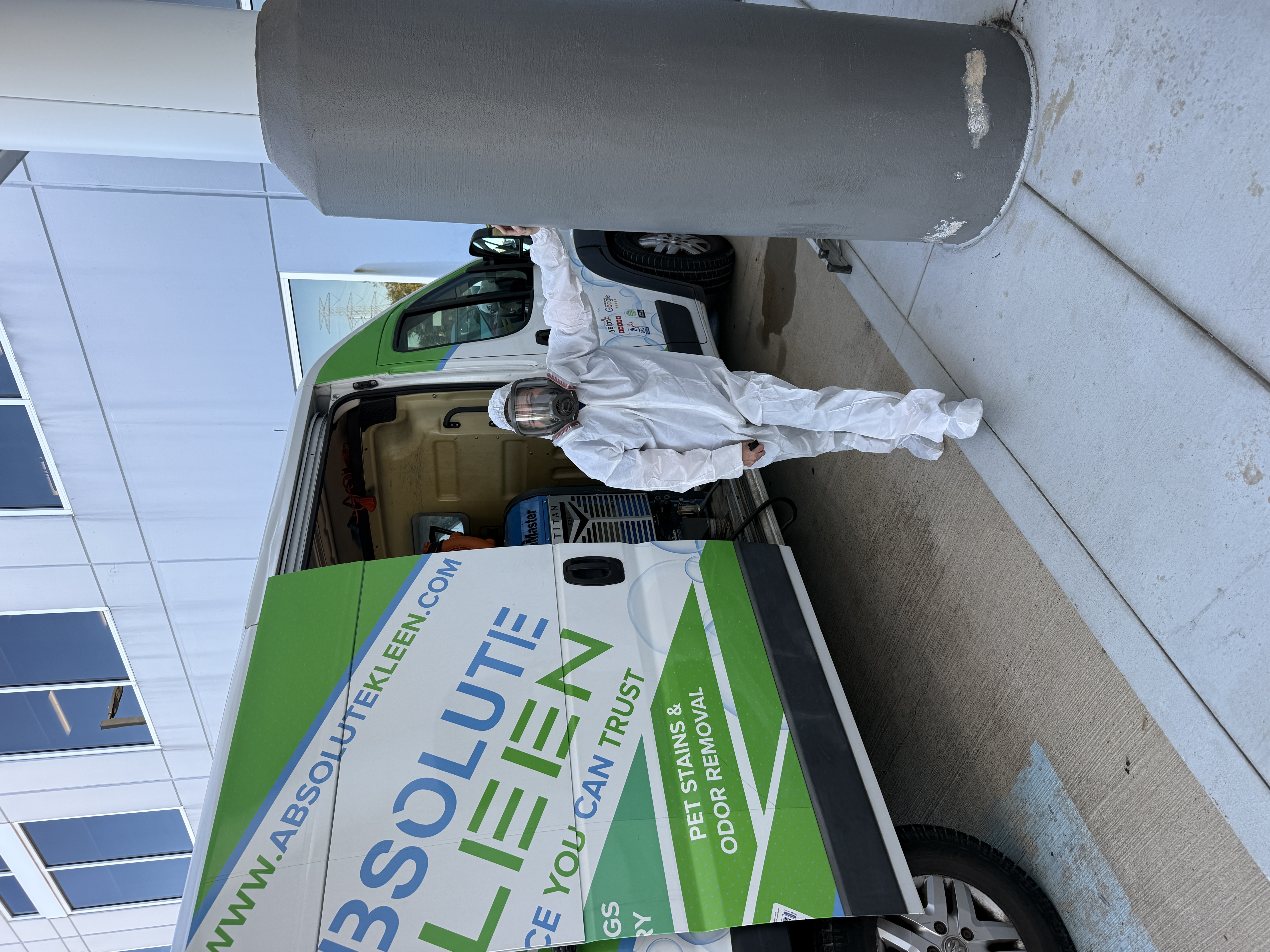
- Containment. The area is sealed with plastic sheeting under negative air pressure so spores stay inside.
- Removal. Contaminated drywall, insulation, and other porous materials are removed and bagged.
- Cleaning. Remaining surfaces are HEPA vacuumed and cleaned with antimicrobial treatment.
- Air filtration. HEPA air scrubbers clean the air throughout the work.
- Fix the moisture. The leak or humidity problem is corrected.
- Clearance. Testing confirms the job is done.
Read more on our mold remediation and mold testing pages.
What to do right now
- Do not disturb large areas of mold
- Keep people with health concerns away from the affected room
- Look for and stop any active leaks
- Run a dehumidifier or AC to lower humidity
- Take photos for your records and insurance
- Call for an assessment
Get it checked
Whatever type of mold it is, it does not belong in your home. If you are in Cypress, Katy, Tomball, Spring, Jersey Village, or elsewhere in Northwest Houston, call (281) 733-2733 or book an inspection.
Common questions
Can I stay in my home during mold remediation?
In many cases, yes. We seal off the work area with containment and negative air pressure so spores do not spread to the rest of the house. For large jobs or sensitive household members, we may recommend staying elsewhere.
Why does mold keep coming back?
Mold returns when the moisture source is not fixed, such as a slow leak, poor ventilation, or high humidity. Real remediation always includes finding and correcting the moisture problem.
Do I have to remove drywall to get rid of mold?
If mold has grown into drywall, the affected sections usually need to be cut out and replaced, because drywall is porous and cannot be fully cleaned. We only remove what is necessary.
More answers on our FAQ page.
Richard Jones is the owner of Absolute Kleen & Restoration in Cypress, TX, a Texas-licensed mold remediation contractor (MRC #2164) and mold assessment consultant (MAC #2165) with IICRC-certified technicians.